How did it get this far? Platner's dishonesty should have ended his campaign
The Maine Senate candidate never really apologized, but some pundits forgave him anyway.

A certain amount of dishonesty is expected. In politics, as in other areas of life, brutal honesty is not often rewarded. A voter, like a friend, does not want to hear that their troubles are caused by bad life choices, even when a frank discussion would serve them well. The skilled diplomat must deliver hard truths with delicacy and a healthy touch of flattery.
When a U.S. politician says that America is the greatest country to have ever existed, its people the best that the world has ever known, a certain degree of leeway must be allowed, even if the rest of the globe's thinking population need not embrace such a patriotic lie.
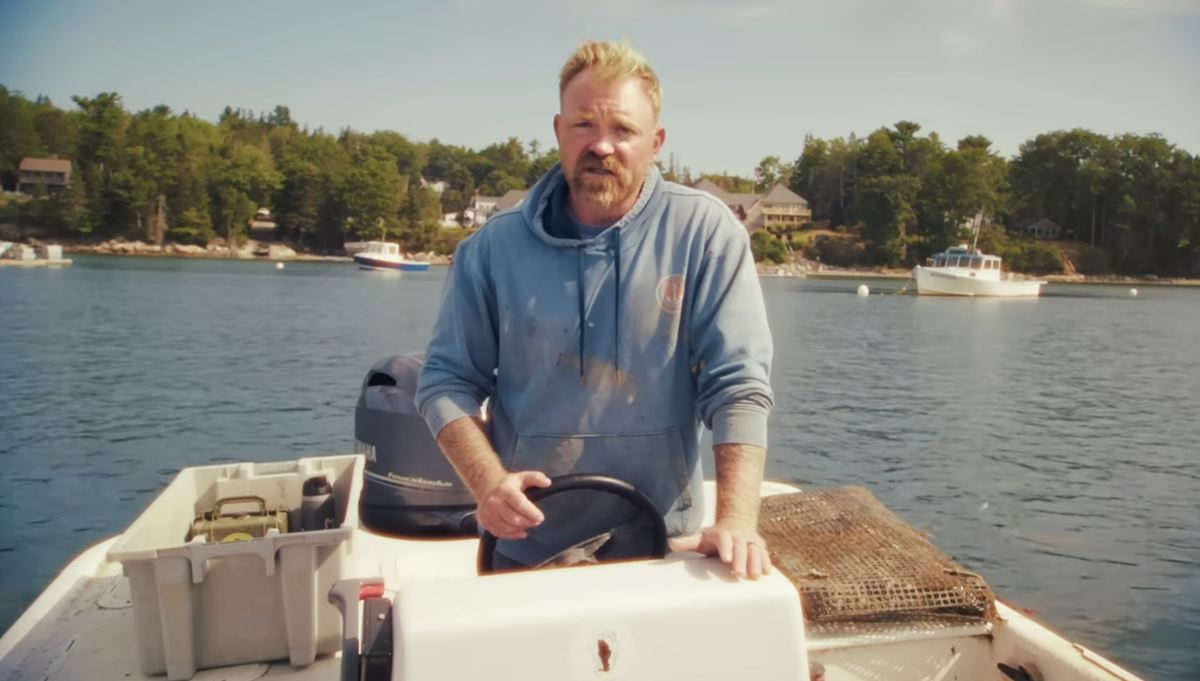
But that is not the sort of quasi-noble dishonesty we saw with Graham Platner, the candidate for U.S. Senate who has now been credibly accused of rape. The Democrat from Maine, who denies the allegation and had a Nazi skull tattooed on his chest, launched his campaign last August with a video that painted him as a working-class white guy who looked like he might be racist but was actually pretty liberal. For some progressives, as well as moderate former speechwriters for Barack Obama, this was a model for how the left could respond to the reelection of Donald Trump: by adopting the lily-white aesthetic of rural America and pairing it with the rhetoric of a 20th-century radical populist.
That Platner was actually more upper-middle-class prep kid than salt-of-the-earth oysterman? This could be forgiven as the cost of running for office; one of his main customers, it turned out, was the mother who sent him to private school. Few people, in politics or otherwise, present themselves as children of privilege who rely on mommy or daddy to pay the rent. On its own, not a huge deal for anyone who has ever met other people.
 Charles R. Davis
The real issue is that Platner lied from the start about who he was, as a man. That tattoo, for instance, which the candidate had obtained as a young Marine on shore leave in Croatia and had shown off in the decades since by repeatedly taking off his shirt, drunk. Platner, a history buff, insisted that he did not know it was a Totenkopf.
"I was appalled to learn it closely resembled a Nazi symbol," he said in a statement last October that revealed his inability to own up ("resembled") to an incontrovertible fact. Months later, a former girlfriend revealed — in addition to recounting instances of abuse — that Platner had for some time referred to the tattoo as "my Totenkopf."
Platner, who worked as a mercenary for the private military contractor formerly known as Blackwater, also refused to own his support for the war in Iraq. In a post on X, the candidate claimed that his Republican opponent, Sen. Susan Collins, "voted to send me to Iraq."
"Did you learn anything from that experience?" he asked her.
But the vote to authorize an invasion of Iraq came in 2002; the war began in 2003; and Platner enlisted in 2004.
He was young, one might argue, and made a mistake. But that's not how Platner explained it, at least before running for office.
In 2020, Platner, posting on Reddit as a 35-year-old man using the handle "P-Hustle," explained why he joined the Marines to go fight in Iraq: "Wanted to have an adventure and kill some people," he wrote. "Joined up in '04, did Fallujah and Ramadi. Hell of an excellent experience."
On the one hand, it is no surprise that any politician would lie, in public, about their past support for the war in Iraq. One could also argue that at least he picked up a gun. For those with progressive values, however, unrepentant bloodthirst is not a desirable trait in someone seeking to hold public office. What does it say about many left-of-center American pundits that they could overlook it — a lie about one's own support for war — out of appreciation for the man's aesthetic?
This original reporting is funded entirely by readers like you. Support us with a paid subscription or one-time donation.
These revelations should have been enough for Platner's supporters to indulge their second thoughts: he told obvious, unnecessary lies and was repeatedly awful to women. Instead, all that was said and done prior to his running for office was dismissed as the ancient and irrelevant past; others painted it as important life lessons that made Platner even stronger as a person and a candidate.
"People who don't get the appeal of redemption really shouldn't try to explain politics," liberal historian Rick Perlstein wrote. In a piece for his website, Perlstein said he respected those who could no longer support Platner, but said the "political panic" over the revelations — the idea that it would "break Platner's political back, or that 'the next shoe to drop' will" — reminded him of those who were more bothered by "Bill Clinton's sexual peccadilloes" than George W. Bush's torture of terror suspects.
Platner's image as a "broken, healing, moral work in progress," he added, could be "more of a feature of his electoral appeal than a bug."
But Platner's self-presentation was always more self-pitying and self-serving than indicative of remorse or redemption. His Reddit posts, in which he boasted not just of his "excellent" combat experience in an illegal war but blamed inebriated women for their being subjected to sexual assault, were a product of his feeling "utterly lost and isolated," he said. "I've said things I regret. I struggled immensely for years. All of that is in some ways how I got here."
This was and remains the non-apology of a predator: Sorry if I did anything to hurt you, but I was going through some things. And if you really think about it? You should feel sorry for me.
In a discordant piece for Columbia Journalism Review, contributing editor Vanessa M. Gezari acknowledged Platner's scandals and noted the fact that they were all revealed by national media outlets, which she attributed to the decades-long destruction of local journalism. But she also faulted national reporters for dwelling too much on what Platner had done and not on the personal charisma he was displaying on the ground.
Recounting a campaign stop she attended, Gezari described Platner as "thinking in real time, forming coherent, precise answers on topics ranging from the human toll of America's forever wars to the rising cost of housing and healthcare and the problem of oligarchy."
By contrast, the media — largely absent from the overwhelmingly white, rural state of Maine — had kept reporting on Platner's Nazi tattoo, infidelities and alcoholism. "The result: months of grinding dissonance between the stories national outlets were telling and the ground reality, at a scale I hadn't seen since the media's much bemoaned failure to understand rural Americans' support for Trump in 2016."
With multiple national media outlets now reporting that Platner is a violent rapist, per an ex-girlfriend, it is worth reflecting on whether this dissonance was such a bad thing. Understanding a candidate's appeal is not the same as sympathy, but it can indeed function as apologism when the median voter's preferences are used as a shield and treated as akin to moral pronouncements — as if it is uncouth to question the values and wisdom of the white, rural and romanticized masses.
In this case, which better served the public interest in the end: Reporting what was said at a campaign stop, and why people liked it, or revealing what was done when the cameras were not around? In 2026 as in 2016, one lesson is that voters can make bad decisions; another is that too many pundits are willing to endorse them.
Appreciate this piece? Consider a donation. And follow The Redoubt on Bluesky.