Fight for something: 'Good governance' is not enough
Opponents of right-wing populism need to stand for more than the status quo.

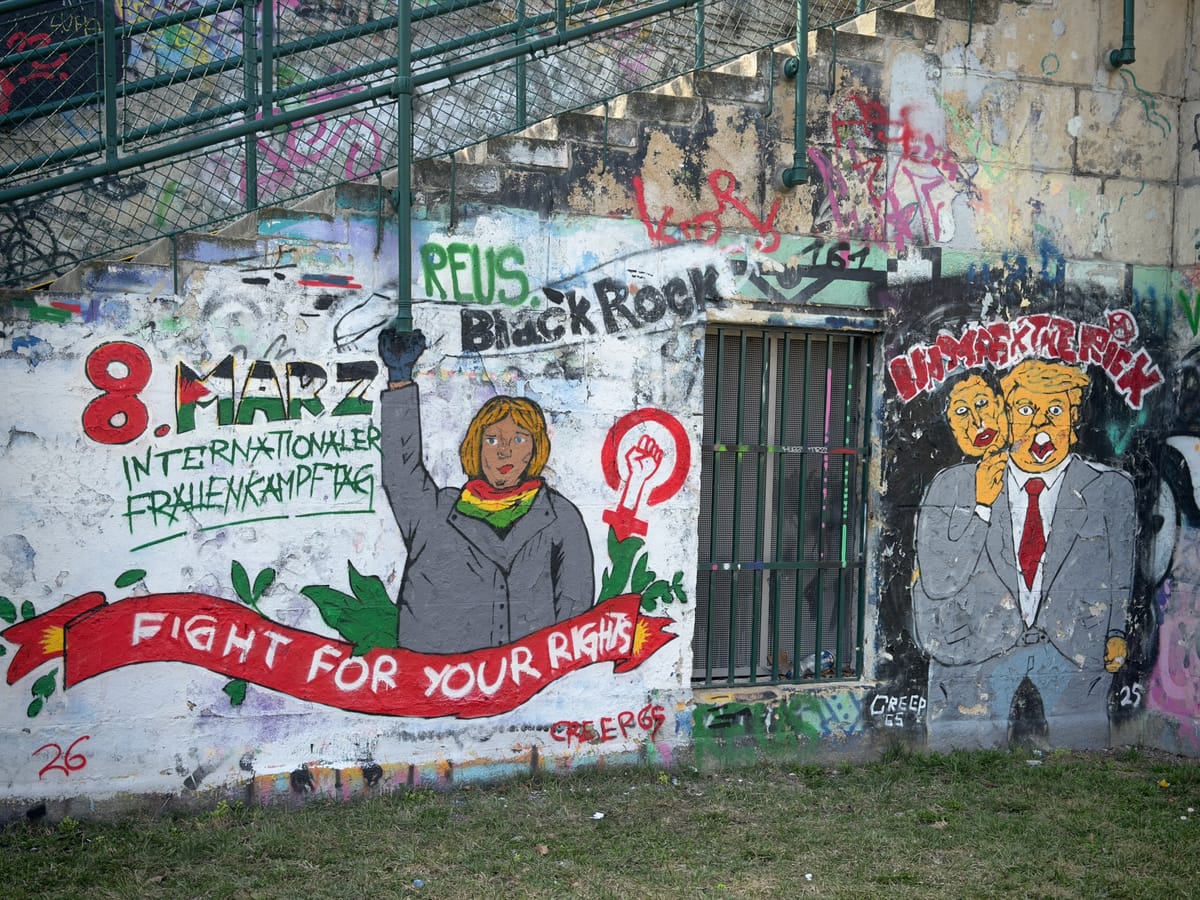
VIENNA — The dread swept over me as he spoke, that sense of recognition — that awful familiarity — tightening the muscles in my stomach and tensing my back. The words coming out of his mouth were causing me physical pain.
Over a pint of beer at a leftist bar in a conservative neighborhood, this political scientist was explaining how the country's political establishment planned to fend off the threat posed by the populist demagogues of the far right. What people want is proper good governance: public services delivered competently, without scandal or fanfare. And voters, listening to their better angels and examining their material interests, would reward those who could deliver it and, in turn, reject the hateful, transgressive thrill of culture wars and literal fascism.
Austria, I began to think, might be destined to repeat not just its own history, but America's too.
The Redoubt's original reporting and analysis is supported entirely by readers like you.
Anyone familiar with U.S. politics between the time Donald Trump lost power and the time he regained it will recognize this story. The Freedom Party, or FPÖ, is Central Europe's answer to MAGA. Founded by a former SS officer, it has already had a shot at power and blew it through incompetence and naked corruption. In 2019, a secretly recorded video was released showing the FPÖ's Heinz-Christian Strache, then Austria's vice chancellor, at a meeting in Ibiza with a woman purporting to represent a Russian billionaire and promising positive media coverage in exchange for government contracts. Strache resigned and the FPÖ's more mainstream conservative coalition partners dissolved the government, saying "enough is enough." In the next election, later that year, the party of right-wing extremism saw its support drop by 10 percent and came in third.
What did Austrian voters then do in 2024? Give the FPÖ — now led by a man, Herbert Kickl, who recommended treating COVID-19 with vitamin D and ivermectin (everything's the same, everywhere) — its best result ever: first place, at just under 29 percent of the vote. The only reasons it did not form a government are hubris and Austria's parliamentary system: Kickl behaved like a man who had just won 55 percent and failed to convince any of the parties representing 7 in 10 voters to join him.
Austria now has a grand coalition, consisting of the conservative ÖVP, the social democratic SPÖ and the much smaller, neoliberal NEOS, which naturally pleases just about no one, particularly at a time of austerity following a period of high inflation. The country has a tradition of odd-couple governance, with the ÖVP and SPÖ each taking turns in the chancellor's office, but that tradition is also why it's so easy for populists here to take on "the establishment."
How is proper good governance faring? I won't profess to be an expert on the issues facing a country I have only lived in for six months, but relatively speaking — compared to the country I just left, for example — I would say it is doing just fine. Vienna looks like a museum; higher education is practically free; health care literally so; and the public transit is cheap and abundant, even in an age of budget cuts. If anything, the country serves as a model for how a strong social safety net is not, alone, enough to diminish the appeal of fascism.
If Austrians are so unhappy with their lot in life that they would prefer fascism to liberal democracy, a hundred years after the Nazis marched into Vienna, then they frankly need to get out more; what they cannot do is claim, by any global measure, to be suffering to the degree historically viewed as necessary for a people to throw it all away. As a columnist for the left-wing newspaper Der Standard recently pointed out, social science indicates that is not economic deprivation that primarily drives support for the far right but false perceptions: voters who are doing better than others, objectively, but imagine themselves to be worse off, or are simply anxious about losing their privileged status.
And that is why I felt a little sick in that bar, hearing that political scientist explain (but, he would add: not endorse) a strategy that sounds an awful lot like former President Joe Biden and the Democrats' plan between 2020 and 2024. Then, as now, the operating theory was that the public would appreciate their real material gains; that people would reward the party that gave new parents thousands of dollars in cash assistance, and appreciate the folks that made politics boring again; that voters in red states would value infrastructure investments and chip factories more than their desire to punish uppity, pink-haired baristas and others who make them upset when they look at their phones.
Yeah, whoops. There were obvious mistakes, including the military and diplomatic support for a genocide in Gaza, but a plurality of Americans looked at the lesser evil and chose the greater one.
Today, in Austria, the FPÖ is polling better than ever, at more than 35 percent, even as the country's economy grows. Their victory is not inevitable come 2029; they polled nearly as well 30 years ago, their support then collapsing. But the ruling coalition is repeating a strategy that has been tried and found lacking elsewhere, including appeals to xenophobia that all sides of the spectrum view as cynical. Being decent at running a government is all well and good, but without an answer for the emotional appeal of the far-right — without being able to sell an inspiring counter-narrative — then the promise of hope and change will indeed be supplanted by the threat of cruelty and hate.
Drink up.
Subscribe to The Redoubt and follow the author on Bluesky.