"No Kings": Absent a demand, Americans are losing interest
Opponents of the U.S. president should not be afraid to say what they mean.

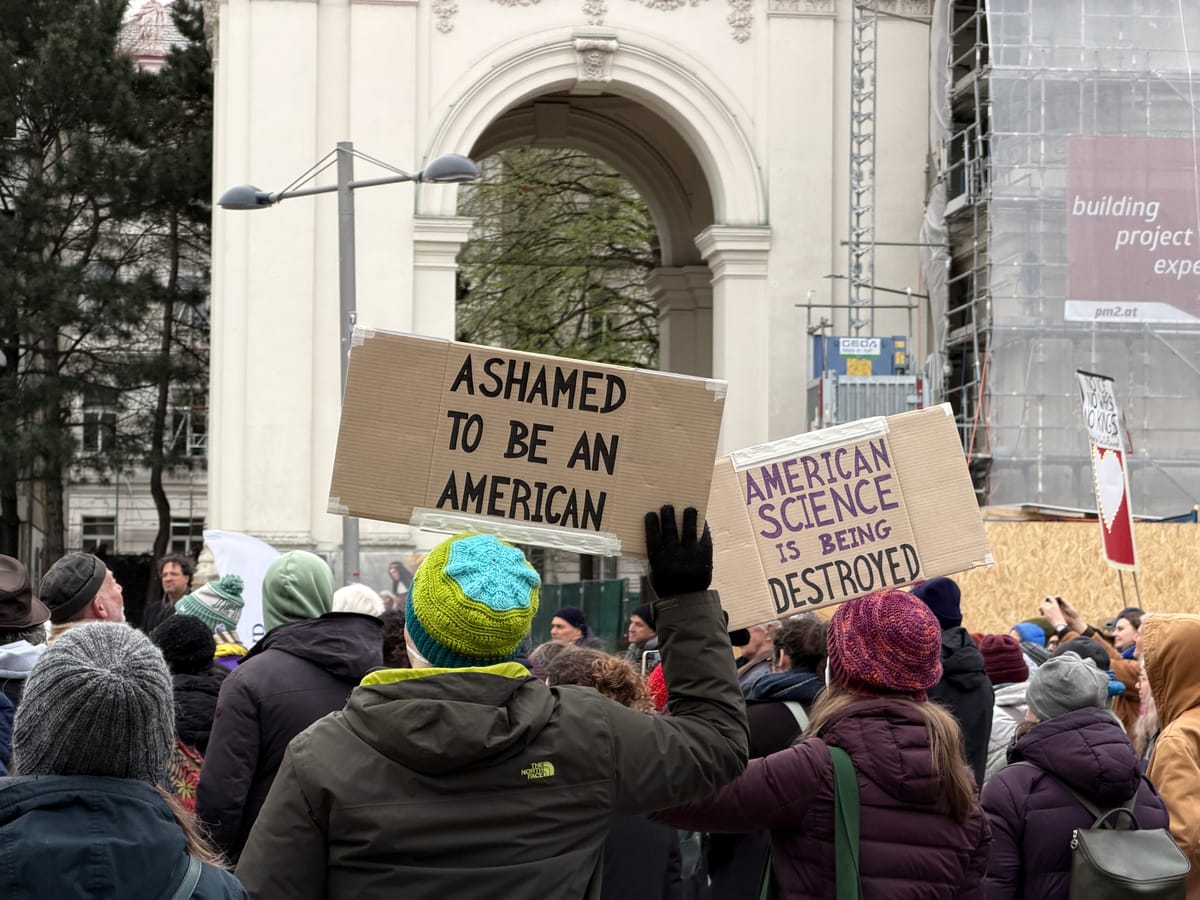
It's hard to argue that what may have been the largest day of protest in United States history was a failure. But it was a missed opportunity, and there is no sign that its organizers plan to correct course.
For the third time since Donald Trump returned to power, millions of Americans took to the streets to demand — well, that isn't clear, exactly. While organizers with the progressive group Indivisible insist that "'No Kings' is more than just a slogan," they are decidedly vague on what it is instead:
"[I]t is the foundation our nation was built upon. Born in the streets, shouted by millions, carried on posters and chants, it [No Kings] echoes from city blocks to rural town squares, uniting people across this country to fight dictatorship together."
On their website, organizers of the March 28 protest reference Trump's efforts to subvert democracy, terrorize immigrants and wage an illegal war ("[spending] our tax dollars on missile strikes abroad"), nowhere do they mention the typical demand of movements opposed to dictatorship: removing the dictator.
It's not as if Indivisible is unfamiliar with the concept of "impeachment," the constitutional remedy for a president who usurps the power of their office.
"We simply cannot just wait for Trump to leave office as his threat level to our democracy continues to increase," the group said in 2021, after Trump encouraged a mob of his supporters to disrupt the peaceful transfer of power. Five years ago, a would-be tyrant's assault on the republic demanded immediate action. In 2026? Accountability is, if not just a slogan, uncomfortably close to one — and a now tired one at that. With the president of the United States wrecking the global economy while launching missiles at elementary schools, his approval rating tanking in inverse relation to the price of gas, why rally around the same nebulous message as a year ago?
The lack of a clear demand — protest, instead, as an expression of general discontent — tracks with the strategy of Democrats in Congress, who impeached Trump twice in his first term and now see the topic of his removal as unhelpful, at best. Rather than viewing impeachment as an opportunity to galvanize their own base, the conventional wisdom among members of Congress is that it would: 1) lead nowhere, with Republicans refusing to provide the votes necessary to convict him; and 2) rally Trump's own supporters around the MAGA flag.
"Literally no Democrats are talking about this," House Democratic Caucus Chair Pete Aguilar told Punchbowl News about 48 hours before the latest "No Kings" rallies. "This is not something that comes up in our discussions at all."
"The reality," added Rep. Robert Garcia, the top Democrat on the House Oversight Committee, "is we know that Trump, regardless of any impeachment vote, is not going to get convicted by the Senate."
Our work is funded entirely by readers like you. Support us with a paid subscription or one-time donation.
The belief is that Democrats can take back Congress by virtue of not being the party of Trump. They may well be right; Republicans, certainly, have won more elections by promising less. But while protest movements should indeed be strategic and mindful of public opinion, it is not wise for them to be bound to the considerations of a tactically conservative political party and the myopia of politicians who are, by the nature of their profession, narrowly focused on eking out a win in the next election.
It is, above all, important to be honest. A man who asserts the right to unilaterally launch a globally destabilizing war, and publicly mocks the constitutional system by declaring it a "military operation" instead, is a man who should be removed from power. The inability to say this projects weakness and breeds cynicism.
You can see it in the numbers. According to organizers, no fewer than eight million Americans turned out to the latest "No Kings" protests, serving as a useful reminder that there is an army of concerned citizens who are eager to do something; those citizens are now reminded that they are not alone, and the relationships they forge today will matter tomorrow. That is certainly not nothing.
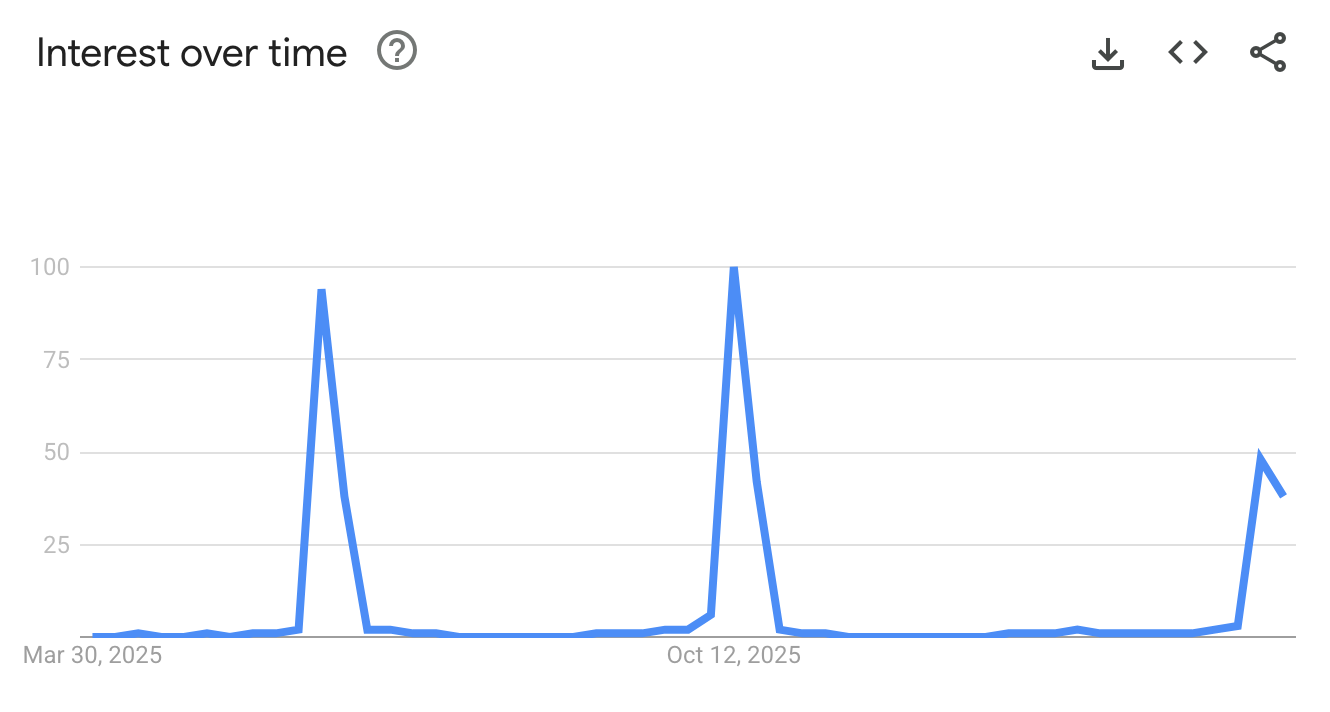
But we were already aware of this last June — and interest, beyond the participants, is now waning. According to Google, searches for "No Kings" in the week leading up to the last protests were about half what they were in the weeks leading up to last year's rallies.
Data from Media Cloud, an open-source platform for monitoring news coverage, also shows that interest is falling off. Of particular note is the diminished staying power, despite the turnout: on the Monday following the June 14 protests, some 357 articles were published by U.S. media outlets; after the October 18 rallies, that number jumped to 428; but in the wake of the March 28 actions, a new high in crowd was met with a new low — just 304 articles were published, a 33 percent drop from five months before.
One can go ahead and blame the media, sure. Protests by the far-right regularly achieve more news coverage than their liberal and leftist counterparts; similar turnout against a Democrat would produce editorials demanding a "national conversation," if not a resignation. But the trend also reflects the lack of a good hook. Sure, a lot of people do not like Trump — but we already knew that. Going forward, the question that needs to be answered is: What are they actually going to do about it?
Indivisible did not respond to a request for comment. But in a recent interview, Leah Greenberg, the group's co-founder, said the plan now is to transition these "No Kings" protests into an "economic show of force": "No work, no school, no shopping."
Greenberg also promised that this nationwide general strike, something that has never before happened in U.S. history, would be centered on a "clear message."
"[W]e demand a government that invests in our communities," she said, "not one that enriches billionaires, fuels endless war, or deploys masked agents to intimidate our neighbors."
A call for "invest[ing] in our communities" is perfectly sensible rhetoric for a Democratic congressional campaign, but it will not spur millions of Americans with at-will employment to risk losing their jobs. The clear takeaway is that there is no real, actionable demand; certainly nothing as eminently graspable as "regime change" (or "stop the war"). It is more of the same — while asking much more of its participants — and as such its organizers are unlikely to succeed where no one has before.