Trump's war on the Americas
The U.S. president views the attacks in Minneapolis and South America as all part of the same conflict.

It sounds bad — the president of the United States, whose mind and body are visibly deteriorating, is asserting the right to kill whomever he likes — but the reality is somehow less great: He has the ability to do so, has exercised it through his military and law enforcement proxies, and, outside of some abysmal polling, has suffered no real consequences for doing so.
Over the past five months, the U.S. military has killed at least 128 people in the Caribbean Sea and Pacific Ocean. When people have survived an initial attack, they have been slaughtered in follow-up strikes — the textbook definition of a war crime.
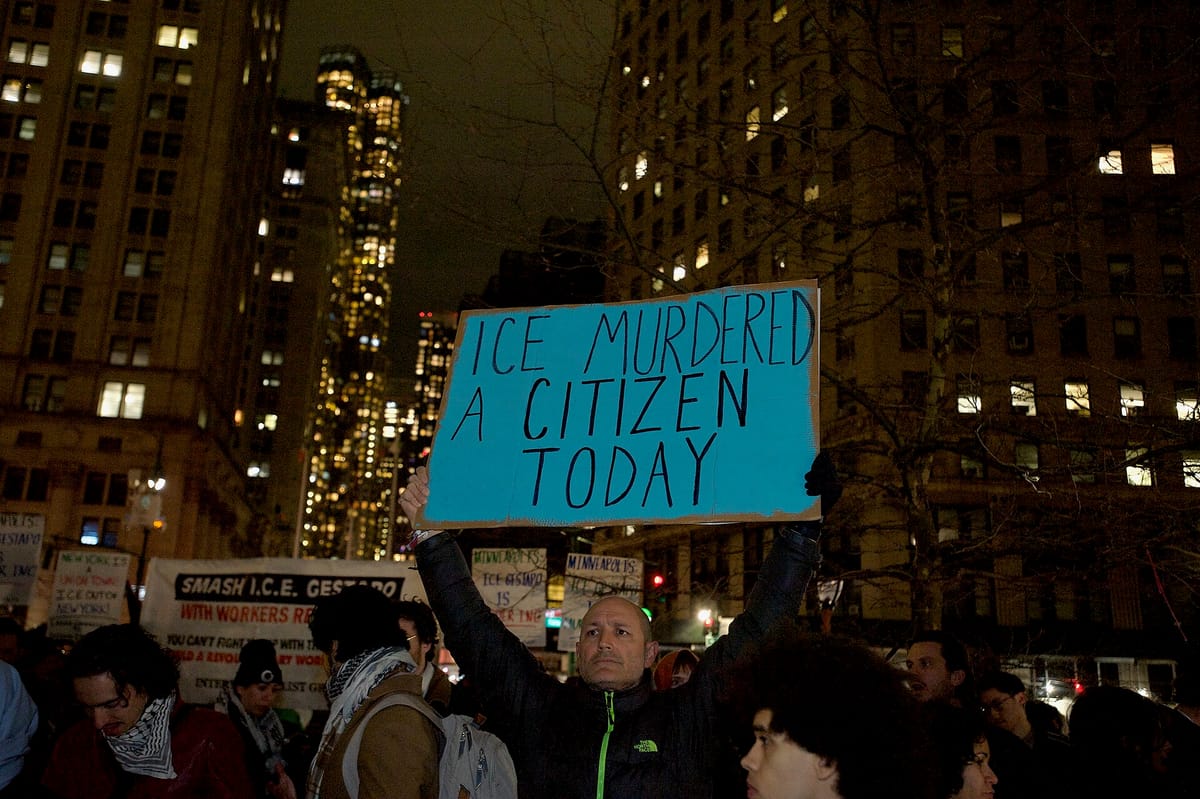
It was this killing spree that President Donald Trump brought up, without a segue, so that he could move on from discussing the killing of two U.S. citizens, Renee Good and Alex Pretti, by masked federal agents in Minneapolis, Minnesota. In an interview with NBC News, Trump slandered the dead as "no angels" and reduced their killing — by his government, in the streets of an American city — to a matter of public relations.
"I hate even talking about it. Two people out of tens of thousands," he said. "And you get bad publicity. Nobody talks about all the murderers that we're taking out of our country."
Instead, many Americans are talking about the murderers employed by their government. The president would prefer they talk about something else: the other killers on his payroll.
"As an example, we've been very tough on the waters," Trump said, pivoting from dead U.S. citizens to dead Venezuelans, Colombians and Trinidadians. "If you look at the waters, where we knock out boats, each boat that we knock out, we save 25,000 American lives. We're doing a job like nobody's ever seen before."
 Charles R. Davis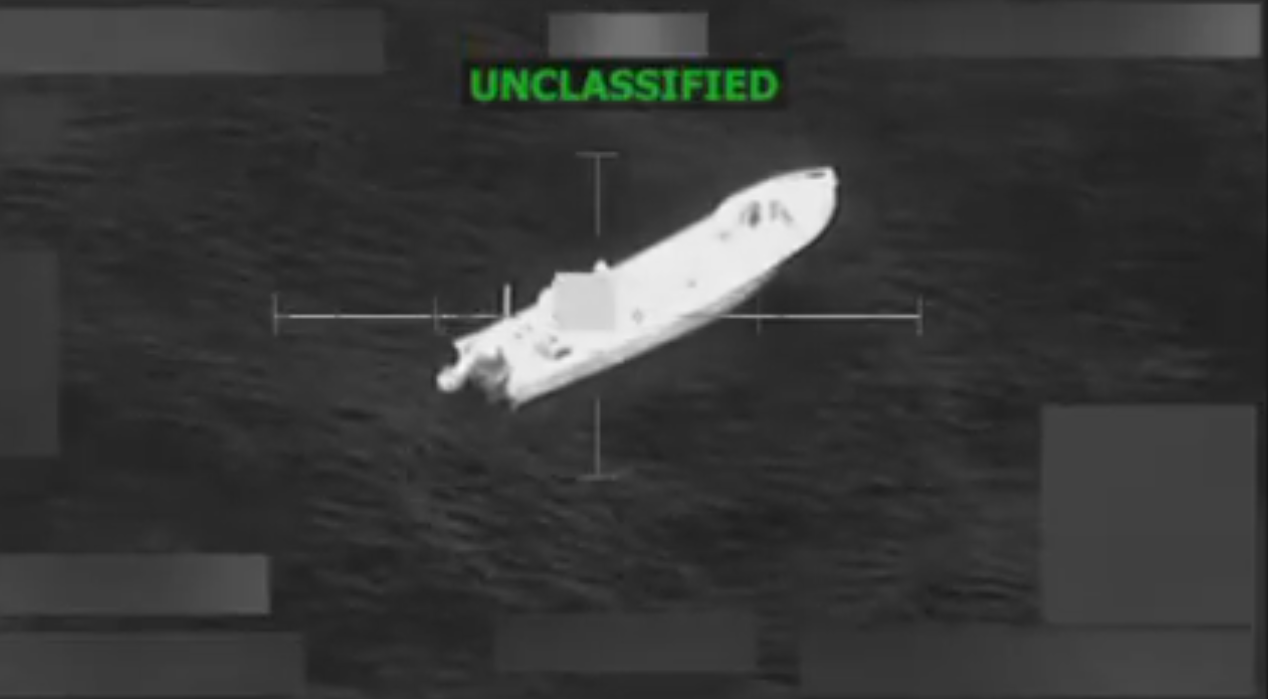
Consider how the president's mind works and why his 79-year-old cerebral cortex would make this connection between federal agents, occupying American cities, and the American military carrying out his unlawful orders. It's all the same thing, isn't it? It's all Donald Trump asserting his dominance by playing judge, jury and executioner.
Those killed overseas have been labeled "narcoterrorists," while Good and Pretti were determined to be "domestic terrorists" within minutes of their state-sanctioned killings. The key difference, with respect to the dead Americans, is that extensive video evidence immediately rebutted administration claims, like Trump's assertion that Good "violently, willfully, and viciously ran over [an] ICE officer." No, every available video shows: she did not.
The only evidence of "narcoterrorists" being killed, by contrast, has been released by the Trump administration as snuff films on social media. Here, the dead are anonymous, their names not even known to those who targeted them. When it hasn't murdered survivors, though, the U.S. military has provided good reason to question if the dead are as guilty as their executioners claim.
Last October, two men survived a strike on an alleged "narco sub." Instead of killing them in a double-tap strike, as it had a month before in a similar situation, these men were spared. In a post on Truth Social, the U.S. president declared that the survivors, a man from Ecuador and another from Colombia, were "known narcoterrorists" who would be subject to "detention and prosecution" in their respective countries ("At least 25,000 Americans would die if I allowed this submarine to come ashore," he added).
What happened next: both men were treated in hospitals, released and never charged with anything. In Ecuador, the attorney general's office declared that there had been "no report of a crime" and the accused had "no pending case against him." In Colombia, the survivor "was never detained," per a government source.
If those two men were innocent, what about the two who did not survive the attack — and the 126 others who have died at the hands of the U.S. military? It is unlikely that Pete Hegseth's Pentagon enjoys a 100 percent rate of success when it comes to executing only those people who totally deserve it; that is also not the standard of civilization.
 Charles R. Davis
In a free and decent society, unarmed civilians are not executed by the state without charge or trial. But Donald Trump's America is neither free nor honorable. The taking of human life is not regretted, as an unfortunate deed forced upon them by a dangerous world, but treated as a punchline: "I wouldn't go fishing right now," Vice President JD Vance, a Catholic convert who's been condemned by two popes, joked last year. "Nobody wants to go anywhere, anything near the water," the president himself added.
That state terror has come home is a predicted consequence of treating it with a shrug (or polite laughter) when it happens abroad. Ten days after the Trump administration began killing foreign civilians on boats, federal agents shot and killed a Mexican national in Chicago, Silverio Villegas González, just after he dropped his kids off at school.
There, too, video evidence flatly contradicted administration claims that the deceased posed a threat to anyone. But with Chicago as with the Caribbean, there was no need to acknowledge a public relations fiasco; outrage never swept through white America.
It's no wonder, then, that Trump seemed annoyed and confused: Why are we dwelling on the deaths of two people in Minneapolis — liberals and race traitors, really — when we've killed so many others, and no one who mattered seemed all that bothered by it? Dead white people may be a heavier lift, in terms of public relations, but as the president of the United States has made clear: in his mind, it's all the same war.
Contact the author and follow him on Bluesky.
We need readers like you to support our independent journalism.
Consider a paid subscription or one-time donation to help us keep covering the global fight for democratic values.
You can also sign up to receive our weekly newsletter, full of original reporting and progressive analysis, and a monthly dispatch with exclusive commentary on international affairs.