Austria was a 'safe haven' for foreign academics. Now it's acting like America.
While Europe tries to lure foreign talent, the Austrian government is slashing funds for higher education.

Six months ago, the country's education minister was telling me all about her government's efforts to exploit American dysfunction. One of Europe's wealthiest nations, Austria could be "a safe haven for science and research and innovation," she told me, its commitment to learning and liberal values making it an attractive landing spot for talent fleeing the political instability of the United States and the Trump administration's all-out assault on academia.
"We want to do things different than the USA," Eva-Maria Holzleitner, Austria's minister for women, science and research, said at the time.
Now, though, she is the face of austerity — and an all too American approach to higher education.
Facing a large budget deficit, the country's conservative-led coalition government is proposing to slash public funding for universities by roughly 15 percent. In a closed-door meeting with university representatives, briefing them on the proposed €1 billion cut, a government representative was reportedly blunt: "Science and research are not priorities for this federal government."
The science ministry alone is expected to slash €190 million from its annual budget come 2028, The International reported.
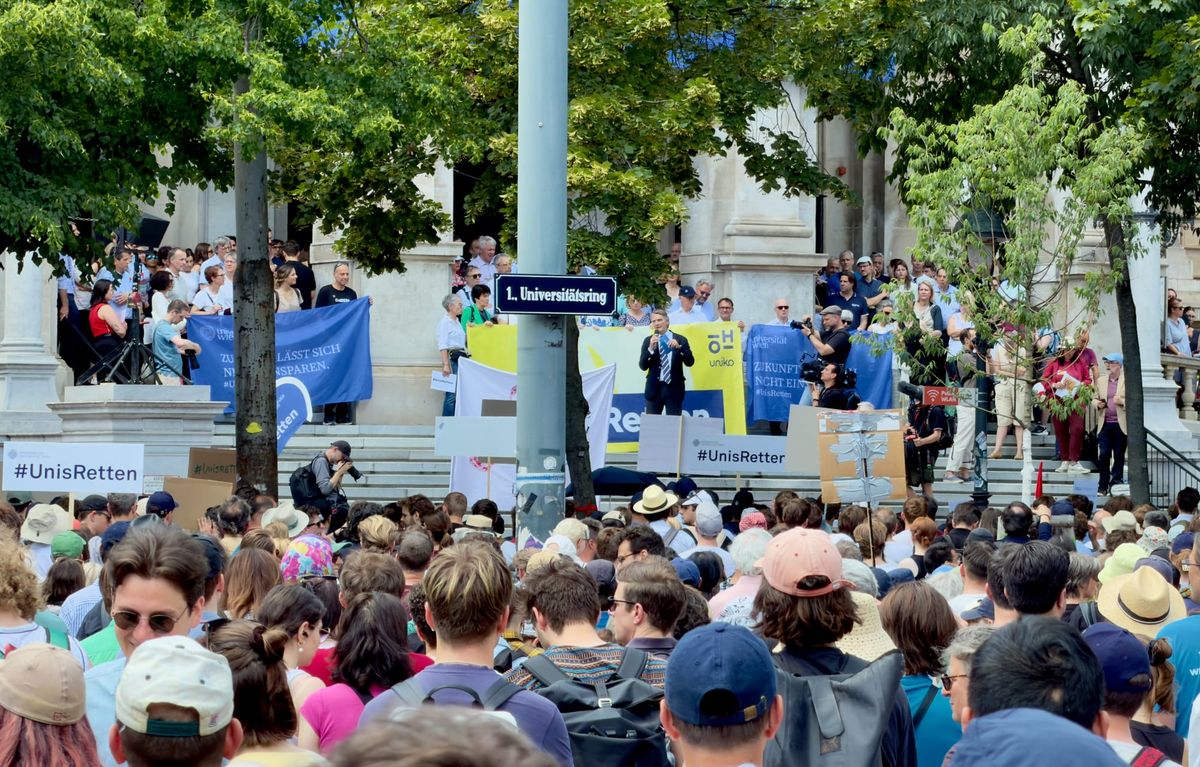
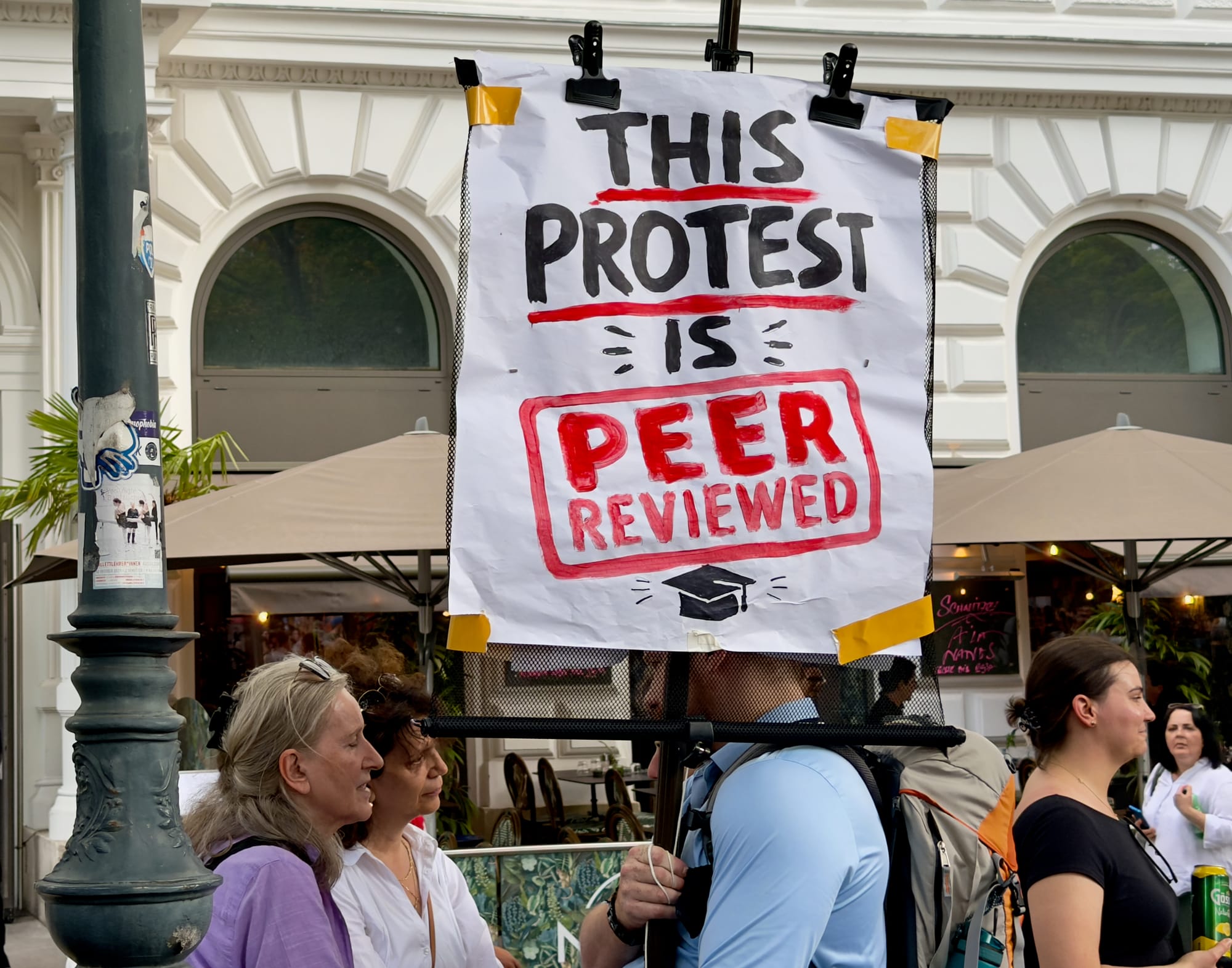
All that has sparked nationwide protests. In Vienna, thousands of students took to the streets on Wednesday, many holding signs that would be familiar to Americans since President Donald Trump's return to office, warning that countries that fail to invest in scientific research — in their own health and future — are destined to reap the consequences.
'Not even a safe haven' for Austrians
"This is a declaration of bankruptcy regarding the importance this federal government attaches to universities," Brigitte Hütter, president of the university association Uniko, said at a press conference. "It has presented itself as a safe haven for academics fleeing Trump. Now Austria is not even a safe haven for its own universities.”
Holzleitner's office did not respond to a request for comment. According to local news reports, she has sought to reassure university officials that the debate over the budget is not yet over and that those proposed cuts may still be reversed. But her party, the center-left Social Democrats, is a junior member of the coalition government. If it were up to her, perhaps, Austria might not be pursuing austerity at the expense of its education.
 Charles R. Davis
As in America, there is also a market for anti-academic politics. The right-wing newspaper Kronen Zeitung, laundering a populist line of attack from the country's far-right Freedom Party, or FPÖ, recently published a story highlighting that university presidents in the country can earn up to €400,000 a year. From a Marxist perspective, perhaps these academic leaders could be earning a bit less, but that of course is not the origin of the attack on figures who code as "left-wing" in reactionary politics.
From a capitalist point of view, many of these administrators — the University of Vienna has 11,000 employees and 80,000 students — could probably earn more in the private sector. These salaries are also not why Austria spends more than €16 billion a year on universities (which also run hospitals). But even if the attack does not land, one thing is clear: the tabloid approach to policy is not limited to the Anglosphere.
Will Americans still come?
At the Institute of Science and Technology Austria, located just north of Vienna, school president Martin Hetzer — an alum of the Salk Institute in California — noted that scientists were leaving the United States even before the present administration. Speaking to a group of reporters on Thursday, he said that 40 percent of the institute's staff were either born or trained in the United States.
"Why? Because we can provide an infrastructure and environment that people want to work in," Hetzer said.
That will continue to be true, particularly at ISTA, which is not directly impacted by the budget cuts being discussed. The European Union, as a whole — the continent's lead funder of scientific projects — is also planning to double its research budget. Austria also still offers a high quality of life at a relatively low cost of living, particularly when compared to places like Boston, New York and Los Angeles.
Charles R. Davis
But, if the proposed budget comes to pass, there will be fewer opportunities across Austria. And researchers looking to flee austerity and illiberalism in America may think twice about accepting an offer in a country that no longer looks so stable.
Austria's next parliamentary elections are not until 2029. But, even before the proposed cuts, there was a sense of dour resignation, at least among academics and students I spoke to in Vienna, about the prospect of right-wing extremists taking power here. The governing right-left coalition, by its very nature, pleases just about no one, while the FPÖ — comfortably in opposition — has a decisive lead in every opinion poll.
Fascism is not inevitable. Some six in 10 Austrian voters would rather not return to the 1930s, and the FPÖ, with less than 40 percent of the vote, would still require a partner to form a government. But an anti-fascist coalition also needs the young and educated — and right now, that segment of the population is being actively demoralized.
This original reporting is funded entirely by readers like you.
If you appreciate ad-free, independent journalism, support it with a paid subscription or one-time donation.