Tradwives and right-wing men: How an 'imagined past' drives fascist politics
Salon's Amanda Marcotte explains the delusional history behind the "tradwife" trend.


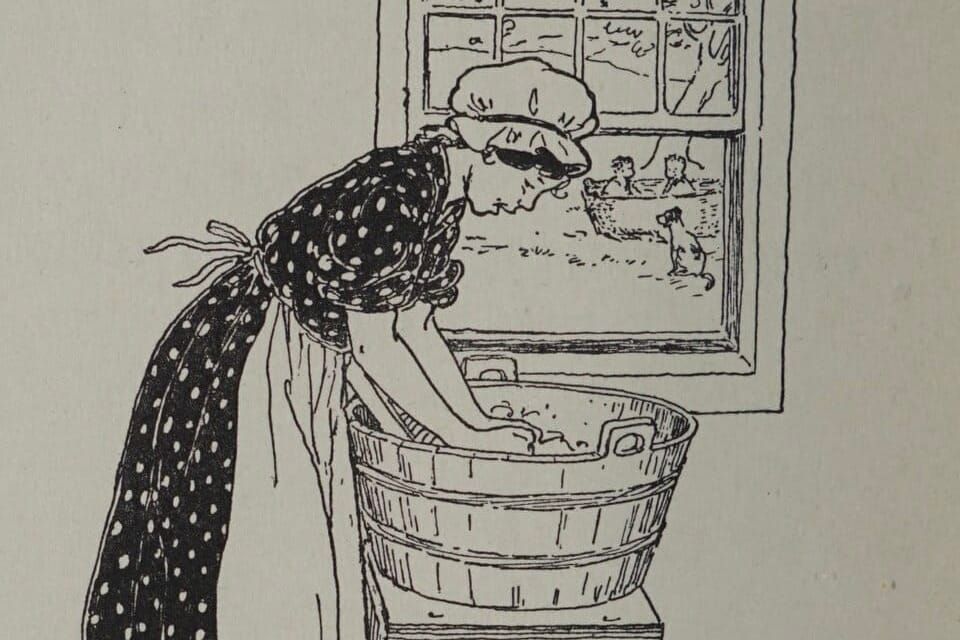
Wouldn't it be nice to leave the commute and Keurig coffee behind? To stay at home and make strawberry preserves with your kids instead of responding to Slack notifications from some man who is not your husband? Take a deep breath and imagine: life on a farm where — with just a packet of seeds, a couple of goats and a few hours of wholesome, aesthetic work — all your family's nutritional needs are provided for by the socially-isolated pocket of land you call home.
This, at least, is the fantasy of the "tradwife" being sold online: nostalgia for the world of yesterday, where men were men and women were content to be their domestic servants. On social media, influencers churn butter and romanticize pseudo-traditional gender roles, preaching a back-to-basics, 19th-century way of life even as they remain glued to their 21st-century phones.
In a conversation with The Redoubt's Charles R. Davis and historian Shirin Sadeghi, co-host of Critical Support, Salon columnist Amanda Marcotte discusses the seductive myth of the tradwife and how this longing for an "imagined past" serves as the rotten core of today's reactionary politics.
CHARLES R. DAVIS: I'm very excited to have on Amanda Marcotte, a senior politics writer at Salon and host of the YouTube show Standing Room Only. Amanda is a pretty prolific writer on politics and feminism and reproductive rights issues, and she has also been, for several years now, writing and reporting about the trend of "tradwives." So, I wanted to actually start with that, Amanda.
I've been hearing about tradwives for like a couple years now and, as I understand it, it is like conventionally-attractive young women selling a sort of nostalgia for pre-pasteurization gender roles. And despite this, it seems to be something you encounter, not at a farmer's market but, ironically, primarily on TikTok and social media. Can you tell me what a tradwife actually is? And if it's just internet jargon for traditional mid-20th century conservative ideas of femininity, or if it's like actually something substantively different?
AMANDA MARCOTTE: I would say that it's substantively different in that it is, like you say, like a retro remix. It is very fascist in the way that it is trying to evoke an imagined past, right? Most wives have never lived the way that the sort of tradwife fantasies that are peddled online are.
And honestly, you hear it used in two separate ways. The term "tradwife," it started to mean kind of what it sounds like: just a traditional wife, which is to say it was used as internet jargon to talk about women who tried to live, I would say, the 1950s ideal gender roles — or even 19th century, in a lot of ways, kind of depending on who you're talking to. Which is: you don't work outside the home; you're economically dependent on your husband; your career is taking care of him, taking care of children, and taking care of the house.
And then what that has morphed into is an online trend on social media, primarily through TikTok and Instagram, because it's very image driven — women who sell this idea as a fantasy. I think the initial idea was that they were selling it to other women, and to an extent that's true; there's a lot of Instagram posts and TikToks about "here I am at home, and in my beautiful stress-free life with my beautiful children in my beautiful kitchen that is always clean, despite the fact that I cook so much," and often even wearing clothes that evoke, you know, either the 1950s or again sometimes like the 19th century. But I do think a lot of this content is actually consumed by men, depending on who the producer is, and there is a not small pornographic edge to some of it.
DAVIS: Are the influencers themselves consciously selling it to men, do you think? Because obviously there is that fantasy for men of like having a wife who is completely fine living in a socially-isolated farm setting with no opportunity to ever leave you; I can see that male fantasy aspect, and certainly there's the, as you've mentioned, 19th-century cosplay kind of aesthetic fetishization going on there.
But I'm wondering if it's the same set of influencers, right? Are there some just cynically selling this image to men and they know that? Or are there some that maybe started out trying to sell this to other women — and it just so happens that men are the ones consuming it and telling other women to follow this influencer?
MARCOTTE: There's definitely different ones that have different audiences. And just like anything on the internet, one thing about social media trends is that they're kind of ambiguous, they're sort of a vague category, and people play with it sometimes in ways that are really fun for different audiences, right? So, somebody like Hannah Neeleman of Ballerina Farm — her account is probably the most famous.
She's a trad wife living on a farm, on a ranch, I think, in Utah ... She's not actually a housewife, because she and her husband run an enormous business selling, you know, beef and other goods online through her account. But her audience is primarily women. I would say she is not very sexualized in her imagery.
But then you go on TikTok, and there's a lot of women, and they kind of tend to embrace the 1950s aesthetic more. But imagine a 1950s pinafore line dress, but with the breasts pushed way up in a push-up bra of the sort that they didn't really have in the 1950s — just kind of in your face. And they're cooking stuff slowly in the kitchen.
SHIRIN SADEGHI: When did all this happen? I don't even know what this is. Did this like coincide with the MAGA movement? Is this something that's been going on in the background all my life, and I didn't know about it?
MARCOTTE: It started in the like mid-2010s. That's when the terminology first started to percolate, and it kind of grew out of a trend called "cottagecore," which actually kind of started on the left. And it was, again, just sort of the aesthetics of "I'm taking pictures of myself living like I'm Laura Ingalls Wilder," but the political angle started to creep in pretty quickly.
 Charles R. Davis
SADEGHI: And what is the political angle?
MARCOTTE: The idea that feminism and women's equality has been bad for women, and that they would actually just be happier if they gave up trying to succeed in the workplace, and instead retreated into domesticity and dependence on men.
DAVIS: Do you think, though, that there's, I don't know, an actual problem with modernity that they are exploiting? Because it seems to me that, if you buy the caricature that we live under a liberal feminist regime, I can see how, for most women, you [could be drawn to] the narrative that modernity requires you to pursue your career at the expense of any relationship with your children; or makes it so your children grow up strangers to you; or, if you are not a high-powered Manhattan attorney making enough money to pay for child care, you actually have to pursue your career, and all the old patriarchal stuff.
You're the one primarily going to the grocery store and cooking for your kids and driving to soccer practice. Like, right now you have to do both, so I could see it being attractive for somebody online, being like, you know what? You can drop your commute and just spend time with your kids and make strawberry preserves. I guess my point is: is there not something wrong with our modern society that they're capitalizing on? And are women buying what they're selling here?
MARCOTTE: Yeah, I think that that's true to a certain extent. But the more I've dug into kind of who the audiences for this stuff are, the more I find that they do not actually take it seriously at all, the female audiences. It's important to understand that for audiences that enjoy this stuff, like the female audiences that like Ballerina Farm, or some of the other like ones that focus more on domestic bliss, right? They see it as just sort of a thing to look at for five minutes online, and they don't really think about it too deeply. It is a fantasy that they do not actually want to live in their real lives.
I think that there is this like thing where you're exhausted as a modern woman a lot of the time, especially if you're married and you have kids, because you have to work full time. And it is true: like all time-use studies show that men do not pull their fair share of the weight at home, and so women still have the second shift problem. They still do most of the domestic labor around the house, and they're exhausted. And so I think there is this aspect where you're sitting on the toilet and you're scrolling through Instagram, and you like look at these pictures, and it seems nice for like five minutes, and then you snap back into reality, and you're like, "I wouldn't want that, because it has all these knock-on effects that I do not want in my life, and as exhausted as I am, the alternative is worse."
SADEGHI: Tell us about the relationship between this kind of idea of a woman at home, taking care of kids, and the politics that we're seeing in the United States right now, where you have a lot of the high-powered politicians on both sides ... where the men are the politicians, and their wives are these people that have their hair done nicely, and they seem relatively fit, and they're popping out three, four kids. Tell me, is there a relationship there that's happening?
MARCOTTE: Absolutely, like this is why I think focusing on the female audience for tradwife content is somewhat missing the point because there's no evidence that women's minds are being changed by online propaganda — like, conservative propaganda — but there is a lot of evidence that it is appealing to men. And we have seen a huge shift amongst male voters in the United States to the Republican Party.
I think the Democratic party does not fit that model that you just described. There are a lot of female Democratic politicians; male Democratic politicians tend to have wives with careers. But, yeah, the Republican Party has started to showily have a lot of male leadership who have these trophy wife/housewife types as their wife model, right? I don't know how else to put this.
The most prominent is JD Vance. He's the vice president of the United States. His wife was actually a very high-powered lawyer; she was far more successful in that field than he was. And he makes a big deal — he brags constantly on the trail, like every speech he gives — he brags about how he basically convinced her to give up her job to be his wife full time. She's pregnant with their fourth child, and she is a very good looking woman. She's very thin and pulled together. What's hilarious and dark about that, though, is that even with all the efforts to turn Usha Vance into this tradwife model to feed to a right-wing audience, a lot of them continue to reject her because she is Indian American, and she's not white, which is really a huge part of this ideal that's being peddled.
 Critical Support
SADEGHI: A lot of Usha Vance's appeal, though, is toward the minority traditional populations that vote Republican, wouldn't you say? I mean, she's Indian, she's from the subcontinent, her parents are from there. A hell of a lot of people from that region of the world voted Republican. They voted for Donald Trump. They want women who take care of kids and tend to their homes. I mean, do you think that part of that is just Usha's decision?
MARCOTTE: We watched a ton of video of Usha for my YouTube program, and I would say she is — she does not seem like a happy person.
SADEGHI:
Yeah, I would agree with that.
DAVIS: Whatever happened with the whole wedding ring controversy?
MARCOTTE: She was pregnant, so it's quite possible that her hands were just too swollen and she had to get it resized, right?
DAVIS: Not looming separation...
MARCOTTE: Yeah, but I think a lot of people glommed onto the fact that she stopped wearing her wedding ring because every interview she gives, she could not be less enthusiastic about this. And in fact ... she'll do a lot of right-wing media, and so they're trying to help her sell this idea — that it was just the most wonderful thing in the world to give up her job and be a full-time wife, and that she and JD Vance have this love affair for the ages — so they'll just set her up with all those softball questions, like, "What's it like?" or "Tell us about your love story" or "What's it like being the second lady?"
And she just will look a little sad, and she's like — she can't remember, really, how they got married. She's like, "it kind of just happened," is often her answer for that. And when she's asked about her life as a second lady, she will often straight up say, "I would like to go home and get my job back."
SADEGHI: So, what's going on with Usha? She's a tradwife, or she isn't. Is this her choice, or is it not in your view?
MARCOTTE: I mean, it's obviously her choice. She could choose to divorce him and go home, right?
SADEGHI: But she's having another kid with him.
MARCOTTE: Yeah, so I don't know. Maybe it's all an act, because a lot of the time when he's on the trail [Vance] gloats about how he basically persuaded her into living this way. And so the narrative overall that they are — whether it's true or not — that they're willing to let sit with the public is that she is a reluctant trad wife.
DAVIS: Yeah, and I mean, it definitely seems like it could be consistent with her reported ambition. Like, the deal could be, you know, JD Vance is rumored to be running in 2028 if Trump decides that the Constitution prevents him from a third term, right? So she does this whole tradwife thing for a couple years — it's very likely a contrived performance — and then, I don't know, in 2031 she gets to have her like first lady healthcare initiative or whatever, and gets to come back out as a professional woman.
It just seems to me like, yeah, it's a cynical ploy, but also Republicans, as we know, especially: they'll perform this relationship, but they're also at the same time hypocritical. There will be nothing wrong — they'll be able to spin Usha coming back out as a public figure in a few years, if that's how they decide to deploy her.
MARCOTTE: Yeah, that might be the agreement they have. And you know, having this conversation, it occurs to me that, you know, the reluctance that both Usha and JD Vance hint at her having all the time might be part of what they're trying to sell. Because a lot of the right-wing guys online that JD Vance is very fixated on appealing to — they discuss ... tradwife life as something that women will have to be forced into. They often do acknowledge that women don't want to do this, and so they will discuss taking away women's jobs — they are not under the illusion that this is something that women want — and that force will be required. They're very fascist.
DAVIS: The abusive, humiliating aspect of it — that's like a perk, not like a flaw with this relationship.
MARCOTTE: Yeah, so definitely for JD... He runs her down publicly constantly. He makes fun of her all the time, and so a lot of what he's doing is performing for his audience that he's humiliating his wife, right?
DAVIS: Like, even that whole thing, [saying], "Yeah, ideally she'd be Christian."
MARCOTTE: Yeah, he complains that she hasn't converted yet.
 Charles R. Davis
SADEGHI: This almost sounds like what Charles was describing, when he was like, oh, you know, she's gonna be quiet, and then, you know, get to be the healthcare czar. That almost sounds like she's biding her time, a la Hillary Clinton, and is very similar to Hillary, in that [she's] an ambitious woman who's stepping back, letting the guy — because the world is misogynist — let the guy win office and get them to a place where she can step in? Doesn't that sound the same to you?
MARCOTTE: No, Hillary Clinton never did what Usha Vance is doing now. She never took a break. She went straight from — she was, you know, when she was the [first] lady of Arkansas, she was also working as a lawyer the whole time. And when they campaigned, when Bill Clinton ran for president, the campaign was actually, they would often say "two for one."
SADEGHI: The first time.
MARCOTTE: Yeah, the first time, and her first year in office, she was like right away she was assigned the job of running his healthcare initiative. And it was only after that failed and the backlash really started to grow against her, that she backed off and started to do more traditional first lady stuff. But even then it was, like, write a book and other things like that. One reason I think she became such a hated figure to Republicans right away, and forever, was that she never stopped presenting herself as a career woman to the public.
SADEGHI: I just feel like she mentioned a lot, throughout her time in office herself, and then prior, when Bill was in office — she would always talk about, well, "I had Chelsea because I knew I had to have a kid if I wanted to go into politics." And I just wonder if this kind is just a different kind of tradwife for different generations; maybe she was the Boomer tradwife, where, you know, she did have the career, she wasn't shying away from that, it was the feminist movement, etc. of the 60s, but she still deferred so much to Bill.
She never divorced the guy, when you know she could have. She became senator and could have had everything on her own after that, and still didn't dump him. I mean, maybe there's just different generations of tradwives. Maybe this is just the new embodiment of this phenomenon in American culture and politics.
MARCOTTE: I wouldn't say that, because the whole point of a tradwife is that it's a throwback — it's a fantasy of an imaginary past, right? And Hillary Clinton was living what a lot of Boomer women lived at the time, which is this compromise, right; like the generation before her was far more [conservative] in their gender roles. And, in fact, she herself personally went up against a lot of this, and she'll talk about it — like she went to law school when they first kind of started letting women do that.
But it is true that she would often make these gestures towards compromise when she was married to Bill. Like she used to just go by Hillary Rodham when he was the governor of Arkansas, and she added Clinton to her name when he ran for president in order to appease people. But I think she was definitely of that generation that was trying to find some compromise; that there was this idea that you could compromise with men, you could have your career, and you could have your own identity, as long as you made some gestures towards him still being the boss. And I think that obviously failed, because now everybody hates her.
SADEGHI: Yeah, so maybe what's happening is there, there is a backlash [on the left] happening to this tradwife sort of phenomenon that you're describing. We have someone like AOC who is not in any way a tradwife, and is sort of really doing well, not being that way. Tell me about that kind of dichotomy that's happening.
MARCOTTE: Yeah, I would say that it's a sign that — and this is often true... there [are] backlashes, but they tend to be concurrent to certain trends, right? So the tradwife thing online, and a lot of men embracing these ideas of the tradwife, is a reaction to the fact that millennial feminists aren't interested in making the kinds of compromises that Hillary Clinton made, right? They're not changing their names — I mean, most are still, but, like, in terms of these prominent career politicians, I don't think AOC even is married yet. And when she does get married, I guarantee she's not going to change her name.
More importantly, on a bunch of the substantive stuff, they're not going to give up their careers. They're not interested in performing subservience in any way. They think that they should be paid the same as men; that they shouldn't have to curtail their hours for child care; and that they should be leaders — that they should be able to run for office, that they should be able to run for president if they want to. And I think that it is interesting: you think of someone like AOC, she's not that different in age from JD Vance, right? He's of the same generation as she is, and so I think you really kind of see the tension there, which is AOC is a figure that appeals to I'd say the majority of American women her age. [They] see themselves in her, whereas JD Vance is trying to appeal to a lot of the men of that generation, and maybe Gen X as well, who are angry about these changes and want to claw it all back.
 Charles R. Davis
DAVIS: So, do you think the reason that the tradwife thing is way more popular with men than women — the fact that Gen Z men are moving to the right, according to surveys — is simply due to the fact that they can't get dates with these liberal, empowered women that won't take their kind of retrograde attitudes?
MARCOTTE: Unfortunately, I think, especially with the youngest, the Gen Zers: Yes. And I don't want to slur millennial men, they tend to be more liberal on average than any other generation in the U.S.
DAVIS: What explains that? Is it just like, you know, the accident of birth, and we grew up with certain children's programming that taught us, in the 80s, "be respectful," and "women can be just the same thing as you." Is that it? Or is it Gen Z grew up under Trump telling you to be the worst version of yourself.
MARCOTTE: I think so. I think that it's not just entirely due to that, but I do think that what is happening is that millennial men, their frustrations, and their, the kinds of frustrations that we all have, were not met with this like deluge of online right-wing propaganda that blamed women for all their problems, right?
So I think what we're seeing with a lot of Gen Z men, and they're the youngest generation, right, is that they are struggling economically. They are struggling, a lot of them. The pandemic disrupted their lives in horrible ways and has caused some socialization problems, frankly, and they are struggling. And instead of what millennials got when they were struggling, which was Obama, this kind of hope- and change-like mentality, an internet that was very free and not algorithm driven and was very information driven, Gen Zers are getting deluged — like a deluge of right-wing propaganda. And, unfortunately, I do think that is turning a lot of heads.
I don't know how permanent it is, and I think that this fantasy that a lot of young men have of how great their life would be if women were more submissive — they would find out that that's not actually true, that being the breadwinner with a dependent wife is actually even more stressful than what they're living life as now. But I think that right now there is a lot of appeal with these kind of backwards-looking fantasies.
DAVIS: I know it's the content influencing people, but I'm always struck by — when, you know, a generation like Gen Z is suffering materially — the men become more fascist and the women become more liberal, even though they're both experiencing the same lackluster job market and lack of wage growth, etc.
MARCOTTE: It's a very good question, I think you know the guest on my most recent episode of Standing Room Only, Tia Levings, she pointed out that these kinds of fundamentalist, fascist notions become more appealing when people are under stress because they offer simple answers to complex problems. But why is that affecting men more than women? I don't know.
I think it might just be that, first of all, Gen Z girls still did grow up with a lot of that girl power mentality, right? But I just also think that women can't afford to indulge these fantasies as much ... like the idea that you're going to get married and he's going to take care of you is very hard to square with the fact that he doesn't have a job that can afford that.
DAVIS: And I'll also point out, too, that the material consequences of our age are not felt equally. Women's reproductive rights were taken away, so it's much harder for them to indulge a kind of fascist movement that says, explicitly, you as women should have fewer rights going forward.
MARCOTTE: Yeah, and we are talking about a very literate, very educated generation, and so it's very easy for women to access the information that they can use to sort of understand why this fantasy is not effective for them.
 Charles R. Davis
SADEGHI: Is this all about reproduction? Is this men wanting women to reproduce more?
MARCOTTE: I think that reproduction is being used as a fig leaf just to give moral justification to attitudes that are actually about gender and power.
SADEGHI: Where do you think this is headed? I just want to see where you think this is headed, because as Charles pointed out, and as you backed up, there is definitely a split where the men are going, it seems one way, and the women are going in the opposite way.
MARCOTTE: I think women are going to win this particular battle. I think a lot of the tradwife ideology is inherently fascist in its orientation, and that is an inherently unstable way of looking at the world. It is rooted in fantasy, and fantasies kind of degrade when they're applied to reality.
And we're seeing this right now with the second Trump term, right? He got elected because he was able to craft this reality TV show-style fantasy for the public that he was a successful businessman that was going to fix everything in a month. Ridiculous, he wasn't, but the problem is he got elected and everything is going to hell, and people are souring on him. The polls show his popularity is dropping like a stone. And I think that, similarly, a lot of the kind of tradwife fantasies are being driven by the youngest generation in a lot of ways, and they're people without a lot of life experience.
And I know, from watching a lot of these online trends, that when young men, especially, get caught up in these ideas, it's often because they haven't dated a lot. They don't have a great social life, and once they become adults, and they get real jobs, and they start to actually date — the real world starts to degrade these ridiculous fantasies.
This original reporting is funded entirely by readers like you. Support us with a paid subscription to help us produce more of it.