The US military failed the test
Instead of defying illegal orders under Trump, American forces have killed scores of civilians outside the laws of war.
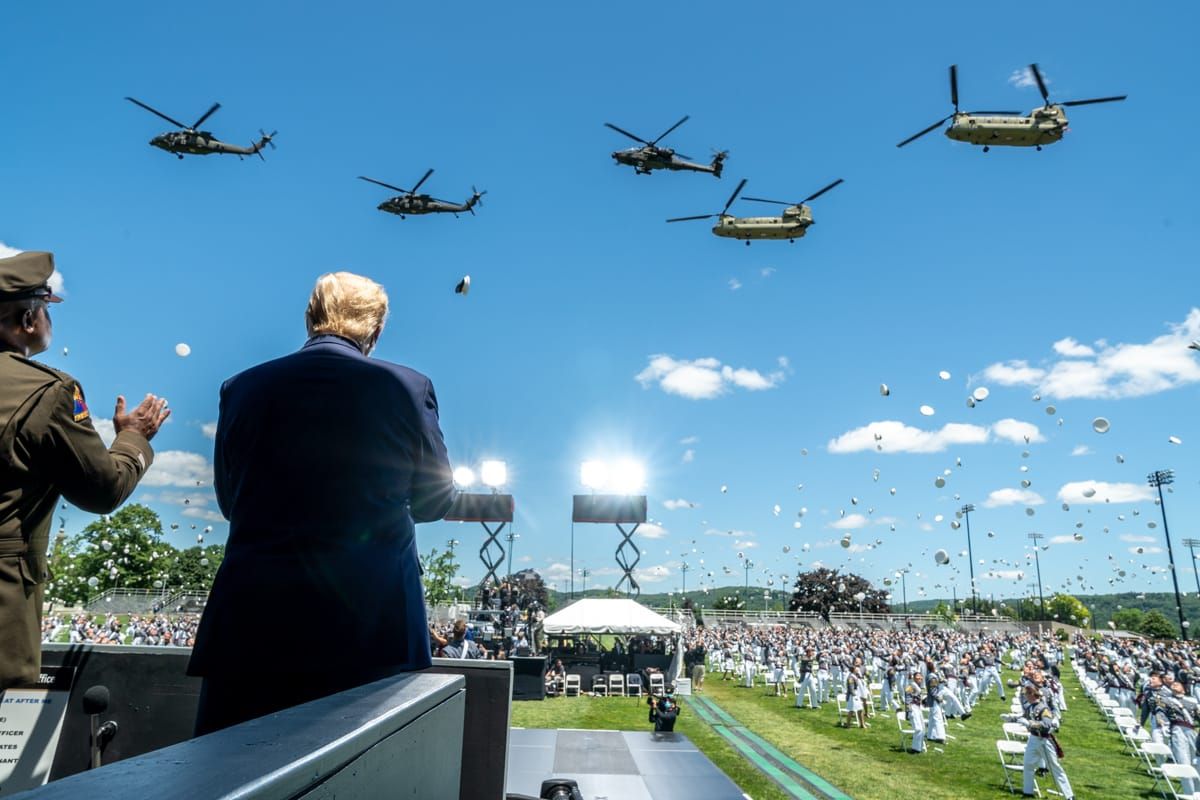
It was an insult to the honor and integrity of rank-and-file members of the U.S. armed forces. The idea that the American military would carry out illegal orders on behalf of an aging tyrant — one with no military experience himself — ran afoul of its history and what we knew about those who enlisted; people who signed up to serve their country, not the mercurial decrees of one old man.
"I think in many ways, the uniformed military may help save us from this president and his lame people," Sen. Mark Warner, a Democrat from Virginia, said last year. "I think their commitment is to the Constitution and obviously not to Trump."
The Department of War, so dubbed by those who lead it, has now killed more than 190 people in what can only be described, legally, as a campaign of mass murder. Despite invoking the term narco-"terrorism," the United States is not at war in Latin America, and those it has killed have not been confirmed members of any armed faction, their identities unknown even to their executioners. Those who have survived U.S. military strikes in the Pacific Ocean and Caribbean Sea — when not slaughtered in a subsequent attack — have been returned to their native countries, where they have not been convicted of any crimes.
Members of the American military may have objected to this open defiance of U.S. and international law — more than a dozen top brass have retired since Trump's return to power — but if that's the case they have not said so. And there are other plausible explanations.
Last October, Navy Adm. Alvin Hosley announced he was retiring as head of U.S. Southern Command, which has conducted these killings. According to Reuters, a source said "there had been tension" between Hosley, who is Black, and Defense Secretary Pete Hegseth, the former Fox News personality who has opined against "diversity" and blocked the promotion of Black officers. Here, as elsewhere, the reason for Hosley's departure has been left to speculation.
Perhaps their silence is a product of military culture that stresses keeping one's opinions to oneself, but the practical effect is complicity. Meanwhile, Hosley's white successor, Gen. Francis L. Donovan — confirmed by the U.S. Senate with no recorded objection — has continued the work.
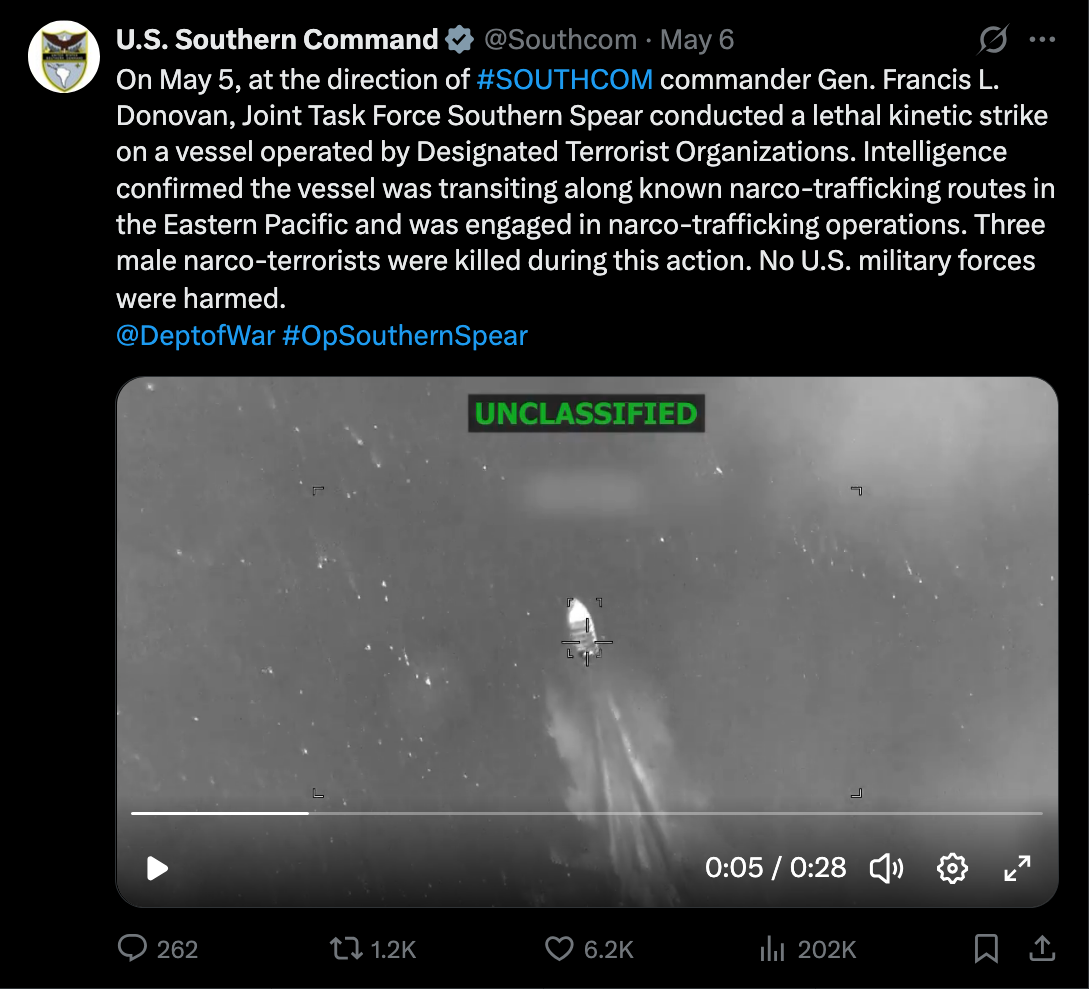
U.S. military leaders have, in fact, assumed ownership of this killing spree. Last December, Admiral Frank "Mitch" Bradley was perceived as taking the fall for the double-tap missile strike on survivors of an earlier attack. Bradley was the commander of that operation on alleged drug traffickers — who, even if guilty, are civilians — and, accordingly, "directed the engagement to ensure the boat was destroyed," according to White House Press Secretary Karoline Leavitt.
Bradley did not step down as head of U.S. Special Operations Command nor has he faced any sanction, social or otherwise. This past March, some 90 days after the controversy, he testified before the House Armed Services Committee, where transcripts show he was not asked any questions about his ordering a state-sanctioned homicide. That is, regrettably, mitigating: If the liberal opposition cannot maintain its outrage, is there even a scandal? It's been more than six months since a group of Democratic veterans urged members of the U.S. military to defy illegal orders; they have not repeated that guidance — or provided an example — in the time that has passed.
 Charles R. Davis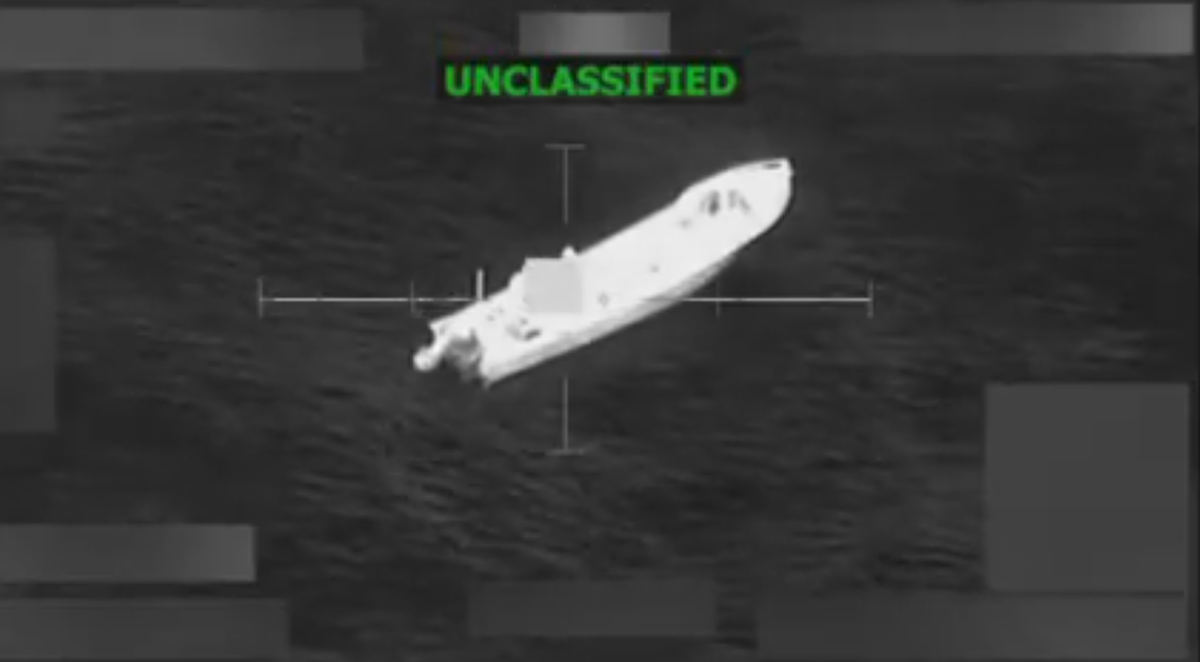
Expecting members of the U.S. military, at any level, to stand up and refuse illegal orders aimed at the foreign "other" was unrealistic in an American society where no institution has navigated the Trump years with much dignity. Practically speaking, the expectation was indeed unreasonable: Hegseth fired the nation's top military lawyers soon after taking office, removing the very people whose legal interpretation could be leaned on to defy an illegal command.
If military lawyers won't say it's wrong; if military leaders don't say it either; what can we really expect of the person asked to pull the trigger?
This is not to say that there is no limit, nor that there is no unseen, internal resistance throwing sand in the gears. And it is true: the rank and file — the most decent — did not enlist for the opportunity to kill their fellow Americans, even if they consider others fair game.
Like other American institutions, however, the U.S. military cannot be trusted to save us from a corrupt and amoral regime. Nearly 200 dead civilians, massacred without even the pretense of an active war, cannot be so easily dismissed; they were as deserving of life and liberty as any U.S. citizen. But the U.S. military murdered them, and it did so without a squeak of public dissent.
Where is the honor in that?